Millions of workers' federal classification as employees or independent contractors is up for rewrite again. The Labor Department published a proposed rule on February 27, 2026 to rescind its 2024 independent contractor rule, which took effect March 11, 2024, and replace it with a standard close to the 2021 version. Nothing has changed yet: a proposal binds no one, and the final rule remains pending.
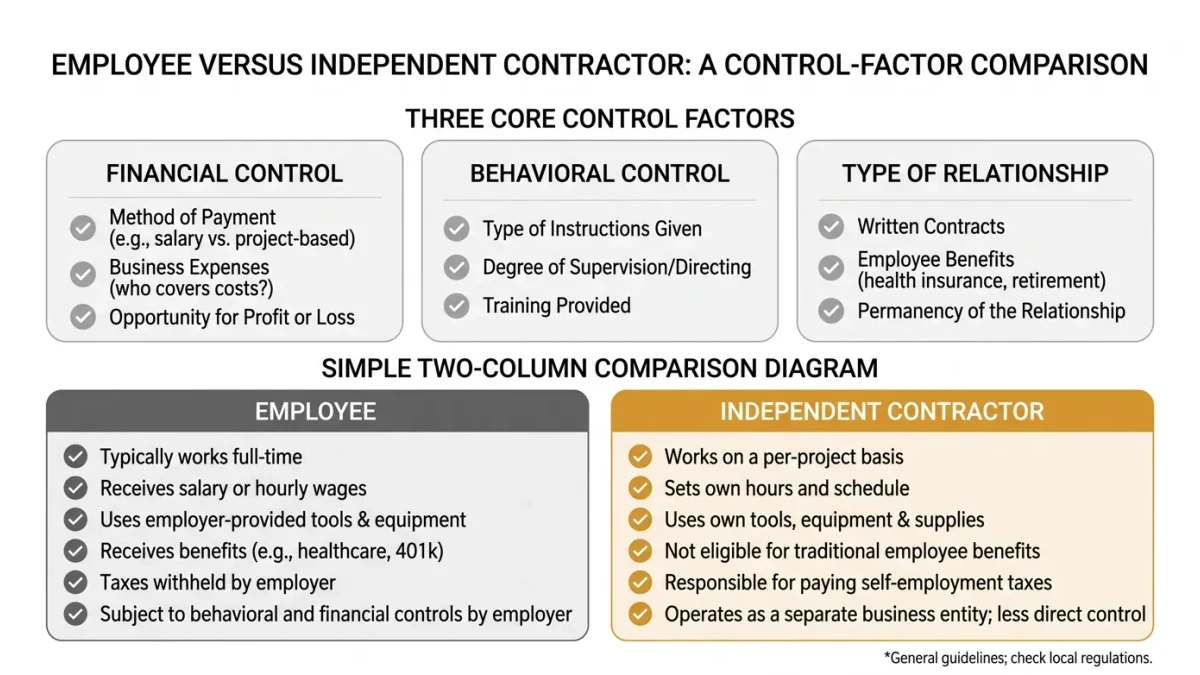
The 2024 rule used a six-factor, totality-of-the-circumstances economic reality test with no single controlling factor, in place of the 2021 rule's focus on two core factors: the nature and degree of control, and the worker's opportunity for profit or loss. The proposal announced February 26, 2026 would restore that two-factor emphasis, a shift that generally makes it easier to classify workers as contractors and keeps them outside overtime, minimum wage and union-related protections that attach only to employees.
What changes, and when
For now, employers and workers remain under the 2024 rule's text, though the Wage and Hour Division paused active enforcement of it in 2025. If the department finalizes the rescission, the new test would govern classification under the Fair Labor Standards Act, with the usual 60-day runway from Federal Register publication before an effective date. Misclassified workers would face a narrower path to reclaim unpaid overtime, and employers would gain certainty at the cost of litigation risk from worker-side challenges.
One element drew less coverage than the factors themselves: the proposal would extend the classification framework beyond the FLSA to determinations under the Family and Medical Leave Act and the Migrant and Seasonal Agricultural Worker Protection Act, per the National Association of Home Builders' analysis of the rulemaking. That would align the two statutes' employee tests with whichever FLSA standard survives, changing leave and housing-protection eligibility for groups the original 2021 rule never touched.
Comments are being taken under docket WHD-2026-0001. Union-side and gig-worker organizations are expected to argue the two-factor test underweights evidence of dependence; business coalitions argue the 2024 test was unworkable. The department has not scheduled a final rule.
How the two tests differ on paper
The 2024 rule, effective March 11, 2024, applied a six-factor economic reality test with no single controlling factor, weighing together the nature of the work relationship. The 2021 framework the proposal would restore emphasized two core factors — the nature and degree of control over the work, and the worker's opportunity for profit or loss — with other considerations secondary.
The direction of travel differs. A control-and-profit emphasis generally makes contractor classification easier to sustain, the article notes, keeping workers outside overtime, minimum wage and union-related protections that attach only to employees.
What a proposal can and cannot do
A proposed rule binds no one. The February 27, 2026 publication opens a comment window; the department must read and answer significant comments before any final rule, and a final rule carries the usual runway from Federal Register publication to effective date, as the article describes.
Until a final rule replaces it, the 2024 text governs classification under the Fair Labor Standards Act — though the division paused active enforcement of it in 2025, so the operative rule and the enforcement posture already diverge, the article notes.
Why classification carries so much weight
Classification decides which statutes reach a worker at all. Employees hold overtime and minimum wage rights and the organizing protections of the labor statutes; contractors hold whatever their contracts say. The same work, paid the same way, can carry different federal rights depending on the label the relationship supports.
That is why the rule has flipped between administrations and why each version draws litigation: the economic reality test's weighting decides outcomes for millions of workers, as the article frames the stakes.
What to watch
The rulemaking docket is the calendar: the comment period's close, the department's response to comments, and any final rule's publication date. Court challenges to a final rule would follow on administrative-law grounds, as they have for each prior version.
State classification tests, which run on their own standards in several states, are unaffected by the federal rule either way.
What the comment record will contain
Rulemaking dockets fill with predictable parties making predictable arguments. Worker advocates file comments defending the 2024 rule's six-factor breadth, arguing that economic reality resists reduction to two factors. Business groups file comments supporting the two-factor emphasis, describing compliance costs and the predictability the 2021 framework provided. Economists and law professors file on both sides of the weighting question.
The department must respond to significant comments in the final rule, and those responses are where the final test's texture appears: which comments moved the draft, which were rejected and why. The article describes the substance at stake — control and profit-loss emphasis versus the broader weighing — and the docket shows how the department defends whatever it keeps.
Comments are public documents. Reading them is how any reader can watch the standard being argued into final shape, months before litigation begins over the result.
Where to read the docket
The proposal appears in the Federal Register dated February 27, 2026, and the docket it opens collects every comment the department received. The 2024 rule's final text and the 2021 rule it replaced are also published documents, so the three versions can be read side by side — the two-factor emphasis, the six-factor weighing, and the proposed return.
The department's own pause on enforcing the 2024 rule, which the article notes, was announced separately. Enforcement posture and governing text are two different documents, and the docket is where the second one's fate will be recorded.
Related: How a Department of Labor rule becomes a rule · How public comment periods reshape federal labor rules · more in labor law.