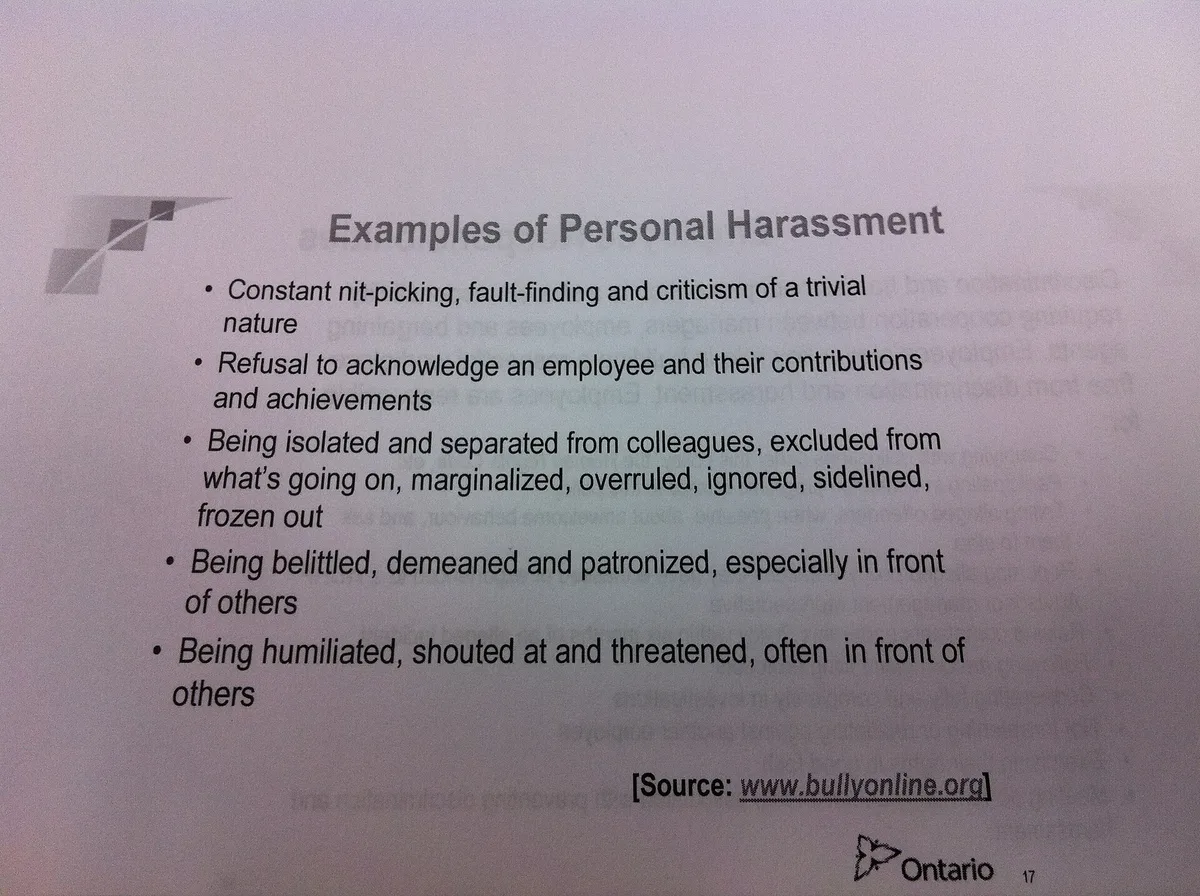
A boss who yells at everyone is unpleasant. A boss who makes sexual comments to one employee, or mocks a coworker's religion, may be breaking federal law. The difference is not how rude the behavior is. It is who it targets and why.
This guide separates ordinary bad management from workplace harassment that the law recognizes. It then walks through the practical steps: documenting what happened, reporting it inside the company, and filing a charge with an outside agency if the internal route goes nowhere. We covered a connected angle in Algorithmic management at work.
One caution up front. Employment law varies by state, and deadlines for filing outside charges are short. Nothing here is legal advice. When the stakes are high, a consultation with an employment lawyer or your state labor agency is worth the hour it costs.
What actually counts as harassment under the law?
Harassment, in the legal sense, is unwelcome conduct tied to a protected characteristic: race, sex, religion, national origin, age, disability, and similar categories that federal and state statutes protect. A rude comment about your spreadsheet skills is not harassment. A slur about your accent, repeated over months, can be.
The conduct also has to be serious or frequent enough that a reasonable person would find the working environment hostile. Courts call this the "severe or pervasive" standard. One offensive joke, in most cases, does not meet it. A pattern of jokes, comments, exclusion, or unwanted touching often does. Physical acts, threats, or anything coercing sexual activity can qualify even as a single incident.
The harasser does not have to be a boss. It can be a coworker, a client, a vendor, or a contractor. In many circumstances the employer is responsible for harassment by a supervisor, and can be responsible for harassment by coworkers if it knew or should have known and failed to act.
Is a rude boss the same thing as a harasser?
No, and this is the most common confusion on the topic. A manager who is harsh, unfair, sarcastic, or simply bad at their job is not necessarily breaking the law. Legality turns on the link to a protected characteristic, not on tone.
- A supervisor who screams at the whole team about missed deadlines: bad management, generally lawful.
- A supervisor who targets the only woman on the team for screaming, and tells her women do not belong in the role: potentially unlawful sex-based harassment.
- A coworker who is cold and dismissive to everyone: unpleasant, generally lawful.
- A coworker who uses racial slurs against one employee: potentially unlawful race-based harassment.
This distinction matters practically. If the conduct is not tied to a protected characteristic, an internal complaint, a transfer request, or a new job search may be the realistic options. If it is tied to a protected characteristic, the legal toolkit opens up.
What should you document, and when?
Documentation is the step most people skip and later regret. Memories fade, and a claim that rests on a pattern needs dates. Write down each incident soon after it happens: what was said or done, when, where, who was present, and whether anyone else saw or heard it.
Save what you can legitimately keep. Copies of messages or emails sent to your own work account may not travel with you if you leave, so a contemporaneous personal note describing each incident is often more durable than screenshots you cannot access later. Check your employer's policies before removing anything from company systems; taking files improperly can create a separate problem.
Keep the log factual. "He shouted a slur at me in the Tuesday meeting, in front of six people" is useful. "He is a horrible person" is not. If coworkers witnessed incidents, note their names. Whether they will later corroborate is unknowable in advance, but the record helps.
How do you report harassment inside the company?
Most employers have a harassment policy, often in the employee handbook, that names whom to contact: a manager, human resources, or a hotline. Use the channel the policy designates. Reporting through the official route does two things. It triggers whatever investigation process the company is required to run, and it creates a record that the company knew about the problem.
Put the report in writing when possible, even if you also raise it in person. An email that states the conduct, the dates, and the protected basis is hard to lose. Ask what the investigation process will look like and when you can expect to hear back.
Retaliation for a good-faith harassment complaint is separately unlawful under federal law and most state statutes. That means demotion, firing, schedule cuts, or other punishment because you complained can itself form the basis of a charge. If anything shifts after you report, document that too, with dates.
What if the harasser is the person you would report to, or the policy is a dead letter? That is when outside options matter.
What are your options outside the company?
The federal route runs through the Equal Employment Opportunity Commission, the agency that enforces federal anti-discrimination law. Filing a charge is free, you do not need a lawyer to file, and the agency investigates or, in some cases, issues a right-to-sue notice that lets you take the claim to court. Many state and local agencies handle parallel claims, sometimes with more generous deadlines or broader protections.
The catch is time. Filing deadlines for discrimination charges are short, often measured in months rather than years, and they vary by jurisdiction and claim. Missing one can end a claim that would otherwise have been strong. This is the single strongest reason to move from documenting to filing quickly rather than waiting to see whether things improve.
Union members have an additional layer. A collective bargaining agreement typically includes a grievance procedure, and stewards handle these situations regularly. Filing a grievance and an agency charge are not always mutually exclusive, but sequencing matters, so raise the question with the union early.
What this means for you
Three takeaways. First, the legal line is drawn at conduct tied to a protected characteristic, not at rudeness, so name the basis when you describe what happened. Second, contemporaneous notes and a written internal complaint are the two cheapest things you can do that later make the biggest difference. Third, deadlines for outside charges are short and unforgiving, so treat the clock as part of the decision, not an afterthought.
None of this makes a hostile job bearable. It makes the path out of one legible: a record, a report, and a filing option that does not depend on the company policing itself. For related coverage of how employers monitor and manage workers, see our explainer on Workplace surveillance and the law, and for the broader legal framework governing work, our Labor Law section tracks the statutes and rulings behind these rights.