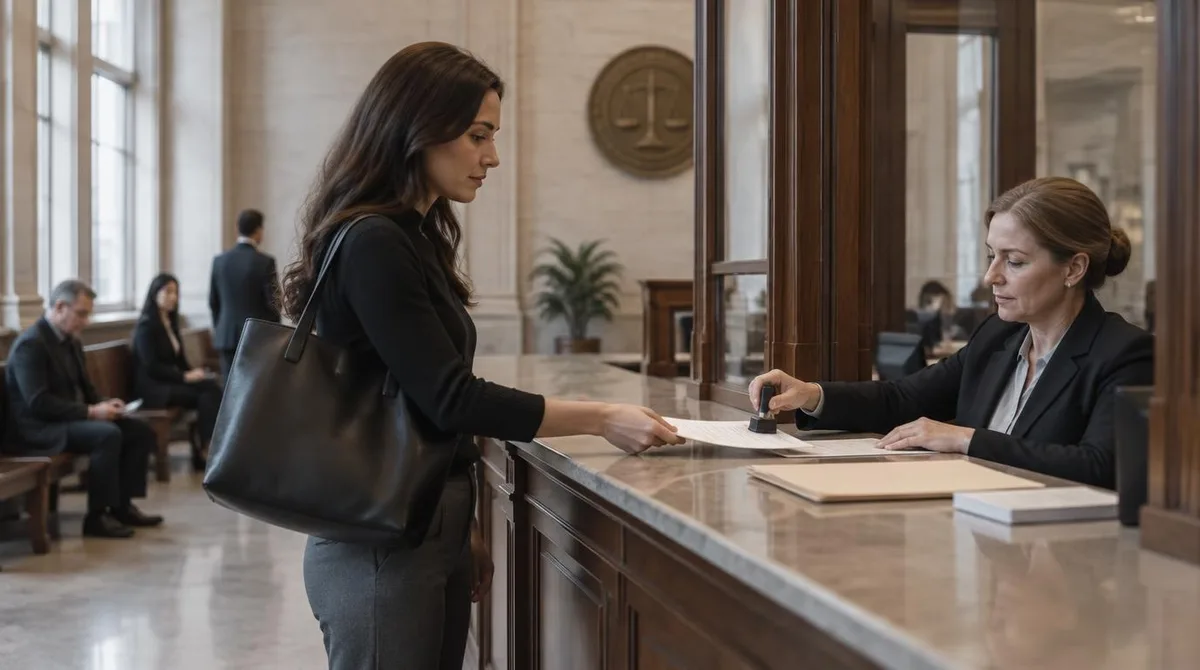
Court coverage is not about lawyers. It is about the moment a dispute between a worker and an employer, or a citizen and an agency, gets decided by someone with the power to bind them both. A legal newspaper exists to stand in that room — or read the filing left behind — and tell the rest of us what happened. Without that record, the decision happens and nobody outside the case knows.
The stakes are plain. A fine against a contractor, a ruling on a union election, a jury verdict in a discrimination suit: each one changes how the next employer behaves and the next worker files. Watchdog journalism treats those decisions as public events, not private paperwork. That is the whole job, and it matters more as fewer people read dockets for a living.
This piece explains what legal newspaper culture is, why courts need watching, and what a reader should expect from coverage that claims to do it well.
What is a legal newspaper, exactly?
A legal newspaper is a publication whose beat is the legal system itself: filings, rulings, settlements and agency actions, reported as news. The word legal, as Cornell's Legal Information Institute puts it, means anything having to do with the law — though in everyday use it usually means something that conforms to the law rather than breaks it. A legal newspaper sits on the first meaning. It covers the machinery: who filed what, who ruled on it, and what changes as a result.
That machinery is broad. As the Wikipedia overview of law notes, laws are created and enforced by governmental institutions and can come from legislatures, executive agencies or judges' decisions that form precedent. Each of those lawmaking channels produces documents a legal reporter can read. A statute gets a rulemaking. A rulemaking gets a challenge. A challenge gets an opinion. The story never really closes, which is why the beat rewards people who keep a docket calendar.
Why do courts need a watchdog?
Courts are built to be public, but publicity is not the same as attention. Most rulings are issued in writing, filed in a docket, and then read by almost no one outside the parties. The affected workers may never learn the case existed, even when it decides pay, safety or jobs for people in their exact position.
Watchdog journalism closes that gap in three ways. First, it finds the cases: it reads filings that nobody else is reading and notices patterns. Second, it translates: a motion for summary judgment means nothing to most readers, but "the judge threw out the claim before trial" means a great deal. Third, it holds institutions to their own record: if an agency says one thing in a press release and another in a sworn filing, a reporter who reads both can say so.
The alternative is a system that answers only to the people already in the courtroom. That is not accountability. It is just procedure.
What makes court coverage different from other beats?
The documents come first. On most beats a reporter starts with a source and verifies with paper. On this beat the paper is the source. A complaint is an allegation, a ruling is a finding, a settlement is an agreement — and the coverage must keep those categories straight. A charge is not a verdict. A verdict is not final until appeals run out. A legal newspaper that blurs those lines stops being a watchdog and becomes a megaphone.
There is also a vocabulary problem, and solving it is part of the craft. The law divides remedies into kinds: as the Legal Information Institute explains, legal relief traditionally meant money damages to make a wronged person whole, while courts of equity could order other remedies, and most American courts today can provide either type. A reader does not need the history. A reader does need to know whether the outcome was money, an order, or both — because that is what tells them what actually changed.
Good coverage does this translation without flattening it. It names the court, the status of the case, and what remains unresolved. It quotes both sides against the record. It never resolves a legal question the court has not resolved.
What does this mean for workers?
For a worker, court coverage is often the only way to learn that a rule changed or a right was tested. An agency penalty against one roofing contractor tells every roofing contractor something. A ruling on how one agency handles appeals tells every federal employee something. The people most affected are rarely the people in the room when it happens.
Our analysis is simple: the value of a legal newspaper is measured in what its readers can do that they could not do before. Read a filing themselves. Recognize when a severance offer is standard and when it is not. Understand why a paycheck looks the way it does. Coverage that ends at "a lawsuit was filed" gives readers a fact. Coverage that explains the process gives them a tool. We covered a connected angle in Legal News Today: How a Court Filing Becomes a Headline Before Lunch.
That is also why the beat resists the loudest voices. Outrage without paperwork is just noise. The documents are slow, but they are the only thing in the room that binds anyone.
How should a reader judge legal coverage?
Judge it the way a judge would judge a filing: by what it actually supports. A few habits help.
- Check whether the story names its source document — the docket, the decision, the citation — and whether it distinguishes allegations from findings.
- Check whether it names the jurisdiction and the status. A state trial court ruling binds one set of parties. A federal appeals ruling can bind a region. The difference is the story.
- Check whether both sides appear. In a contested case, the employer's account and the workers' account are both claims until a court says otherwise.
- Check whether numbers trace to a named document. A fine amount, a wage figure, a vote total: each should point back to the filing or agency record that produced it.
Readers who want a deeper walkthrough of the mechanics can start with How to read a court filing without a law degree, and those choosing where to follow the beat can compare outlets with Legal news websites: How to pick a legal news website or newsletter that fits. For a look at how the pipeline works in practice, see Legal News Today: How a Court Filing Becomes a Headline Before Lunch.
The closing argument for the docket
The evidence in this piece comes down to one point: the legal system produces a public record, and the record only becomes accountability when someone reads it and reports it. A legal newspaper is that reader. It watches the courts because the courts watch everyone else — employers, agencies, unions, governments — and no institution should be the only one not watched.
What remains unknown is how long the economics of that work hold. Reading dockets is slow, and slow work is hard to fund. But the need does not shrink with the budget. Every ruling that changes a workplace lands on someone who was not in the courtroom. The job of legal newspaper culture is to make sure they hear about it anyway — accurately, both sides sourced, one rhetorical flourish per piece, the rest documents.