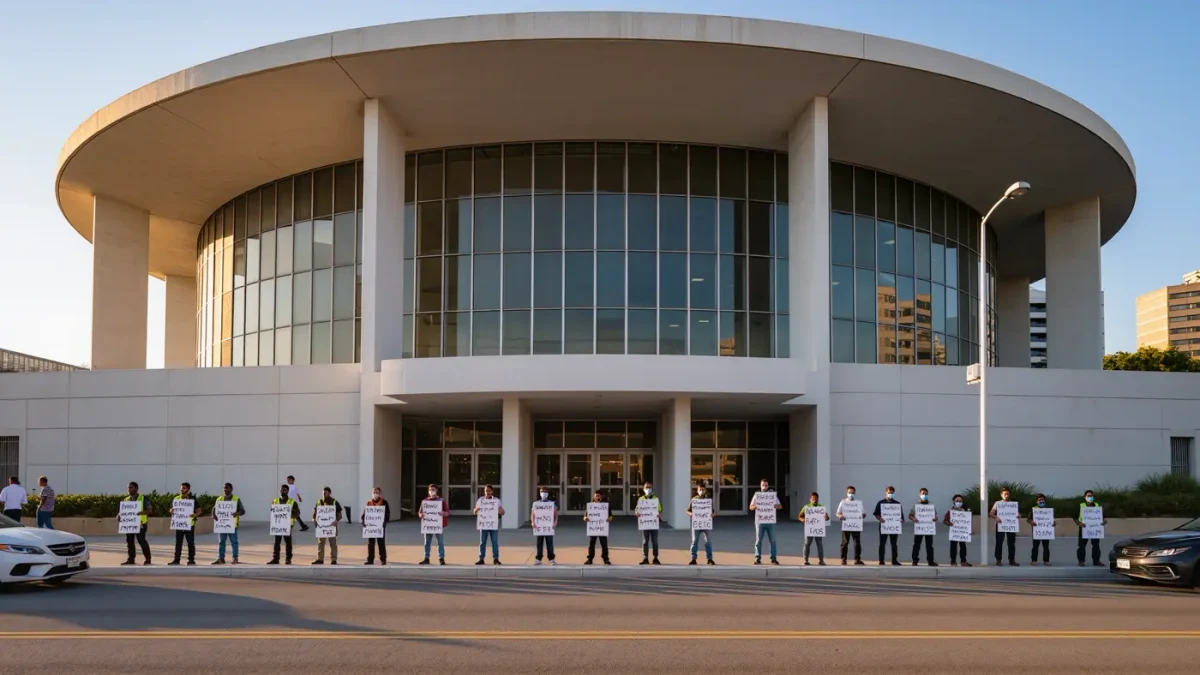
Yes, workers can strike over safety, and the law protects more of that conduct than most coverage suggests. The National Labor Relations Act protects strikes and refusals to handle dangerous work as concerted activity, while OSHA separately protects refusals to work when a reasonable person would see a real risk of death or serious injury (NLRA Section 7; OSHA workers' rights guidance). OSHA's top penalty for a willful violation stood at 165,514 dollars in 2025 (OSHA penalty schedule). The protections differ, and confusing them is how workers lose them.
Union Times Today publishes information, not professional advice; a specific refusal or strike decision can carry consequences that only a review of the facts can assess.
What does the NLRA say about safety strikes?
Section 7 protects employees acting together over working conditions, and hazardous conditions count. A strike over safety is either an economic strike, if it aims at better conditions through bargaining pressure, or an unfair labor practice strike, if the danger ties to employer violations of the Act. The label matters more than the picket sign: it determines whether the employer may permanently replace the strikers.
When is refusing unsafe work protected under OSHA?
Section 11(c) of the OSH Act bars retaliation for refusing work where the employee holds a reasonable belief of imminent death or serious injury, and where there is no time to eliminate the danger through regular enforcement channels (OSHA, Section 11(c) guidance). The refusal must be made in good faith and in response to a genuine risk, not a preference. OSHA enforces the protection through complaints filed within 30 days of the retaliation.
Economic strike versus unfair labor practice strike
| Feature | Economic strike | Unfair labor practice strike |
|---|---|---|
| Typical cause | Wages, hours, conditions, including safety demands | Employer violations of the NLRA |
| Permanent replacement | Lawful | Not lawful |
| Return rights | When equivalent openings exist | On unconditional offer to return |
| Who decides the label | The NLRB, on charge and record, not the parties' press releases | |
What should workers document before a safety stoppage?
- The specific hazard, in writing, with dates, locations and photographs where safe to take them.
- Who was told, when, and what the employer did or did not do in response.
- Any company safety-committee records, inspection reports or incident logs that mention the condition.
- Names and job titles of witnesses, gathered before memories blur.
- The exact words used in any threat or discipline following the complaint.
Documentation rarely wins a case by itself, but the board and OSHA both decide retaliation and bargaining questions on records made at the time. A hazard raised only after a strike begins reads as justification in search of a dispute.
Does a safety strike lose protection if the union is wrong about the danger?
Not necessarily, on either track. Concerted activity is judged by whether workers acted in good faith over a genuine condition, and OSHA's reasonable-belief standard does not require the worker to be right, only reasonable (OSHA guidance). The risks lie elsewhere: individual refusals that look like personal job actions, or stoppages where the safety framing arrives after the grievances do, are where protection fails in practice.
How does the NLRB decide which strike label applies?
On charges and the record, after the fact. Anyone may file an unfair labor practice charge within six months of the conduct (NLRA Section 10(b)), and the regional office investigates whether employer conduct contributed to the stoppage. The parties' own statements at the time, in notices, texts and demands, become the evidence that fixes the label, which is why disciplined written communication during a safety dispute matters more than the banner on the picket line.
Can workers use OSHA and strike at the same time?
Generally yes, and the routes complement each other. A complaint to OSHA can trigger an inspection without a strike; a strike pressures the employer through production while the agency moves on its own calendar. The statutory protection for a refusal under Section 11(c) narrows, though, where regular channels, such as an existing OSHA complaint, could remove the danger without risking life or health (OSHA guidance). Workers who document both tracks preserve both.
What happens when the strike ends?
Return rights differ by label, and the difference compounds over time. Unfair labor practice strikers are entitled to reinstatement even if replacements fill their jobs, on an unconditional offer to return; economic strikers wait for equivalent openings (NLRB case law). Strikers who are discharged for alleged strike misconduct face a separate board process, and allegations of misconduct are allegations until a decision issues.
What about public-sector workers, who lack NLRA coverage?
Their rights come from state collective bargaining statutes, and safety strikes sit on a patchwork: some states permit strikes by defined public employee groups, others prohibit them with injunctive and penalty provisions, and a few channel safety disputes into compulsory arbitration (state statutes, various dates). OSHA's Section 11(c) does not cover state and local government workers either, since the federal OSH Act excludes them; roughly half the states run their own OSHA-approved plans that do. Check the state plan first, because jurisdiction decides the remedy.
What if the employer disputes that a hazard exists?
That dispute is the system working as designed, not a dead end. The employer's position does not erase the protections; it raises the evidentiary stakes. OSHA can inspect on a worker complaint and cite a hazard the employer denied, and a board region can find concerted protection even where the feared harm never materialized, so long as the belief was reasonable at the time. What unravels protection is not employer denial but evidence of a different motive: records showing the stoppage was planned before the hazard arose, or complaints about wages dressed in safety language.
Time cuts both ways. OSHA inspections take weeks; board cases take longer. Workers deciding between an OSHA complaint and a stoppage are deciding between a slower process that builds a documentary record and a faster one that builds leverage, and the strongest cases do both.
One boundary deserves emphasis. Protected activity describes worker conduct under the labor laws; it does not make a hazard legal or make an employer's operations safe. The OSH Act runs parallel to all of it, obliging employers to maintain a workplace free of recognized serious hazards, and citations, not strikes, are that statute's remedy. A stoppage can be lawful and still leave the hazard in place unless one of the two systems, bargaining or enforcement, actually removes it.
Related: A union win is not a contract: why first deals stall · Can public employees be required to pay union fees?.