A federal jury has ordered Northwest Arkansas Hospitals, LLC to pay $105,000 in damages for sex discrimination under Title VII, the Equal Employment Opportunity Commission announced on July 28, 2026. The verdict came in the commission's suit on behalf of Efrin Chavez, a surgical technician at Northwest Medical Center in Bentonville.
Local reporting broke the award into $5,000 in compensatory damages and $100,000 in punitive damages; the EEOC's release described the total as compensatory and punitive combined. The verdict is a finding by the jury, and any post-trial motions or appeal would come next.
What the case was about
The EEOC sued after investigating Chavez's charge, alleging the hospital discriminated against him because of his sex in its treatment of him as an employee. The company defended the case, and the jury resolved it against the employer. The EEOC's release states the jury found the hospital liable for sex discrimination under Title VII.
Northwest Arkansas Hospitals, LLC operates Northwest Medical Center-Bentonville. The commission did not announce injunctive terms in its announcement of the verdict.
What it means for workers and employers
For hospital workers, the case shows that Title VII's sex discrimination protections apply regardless of the worker's or the patient population's sex, and that the EEOC continues to try individual cases to verdict even in a period when the agency has narrowed several policy areas.
For employers, the punitive component is the notable figure: a jury put nine-tenths of the award into punitive damages, which signals the panel found conduct beyond ordinary negligence under the statute's standards for such awards.
The detail other coverage skipped
The split of the award matters more than the total. Statutory caps limit compensatory and punitive damages combined against larger employers, but the jury's $100,000 punitive figure will anchor any post-trial fight over reduction or affirmance.
How an EEOC case reaches a jury
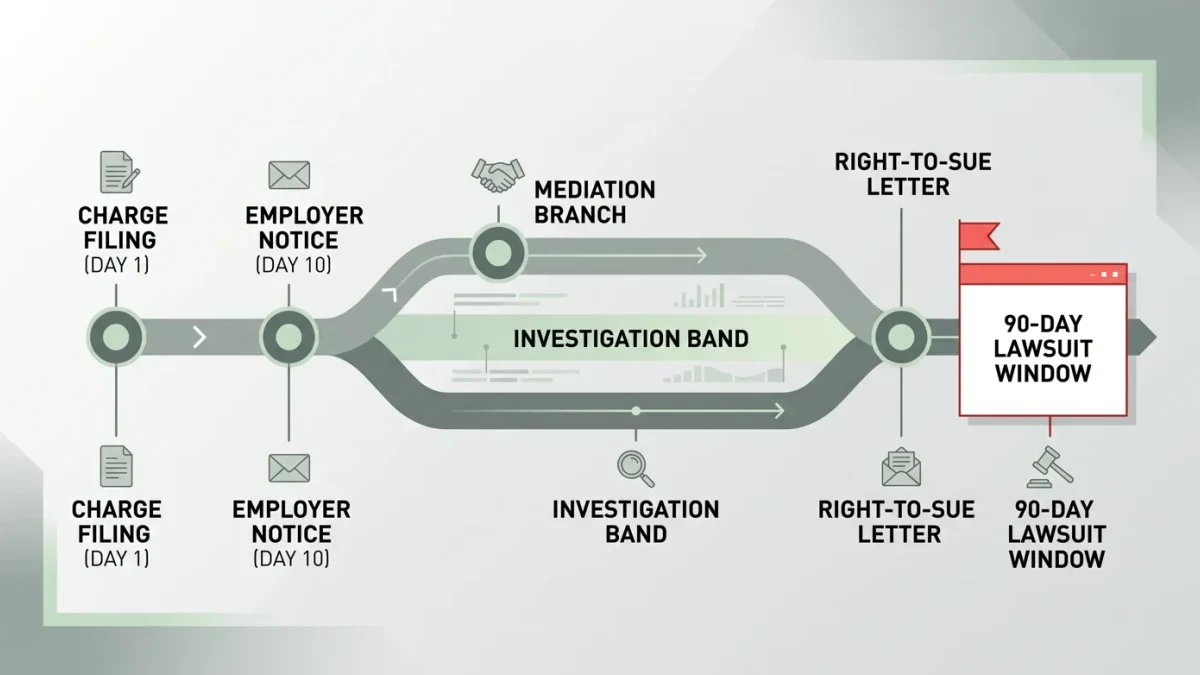
The path to this verdict was procedural, not sudden. A worker files a charge; the commission investigates; and if it finds reasonable cause and settlement talks fail, the agency may file suit in federal court. Only then does a jury hear the evidence, as one did in the commission's suit on behalf of Efrin Chavez.
Each earlier stage leaves a record the trial builds on. The charge defines what is at issue; the investigation gathers the evidence; the conciliation attempt, where it occurs, tests whether the parties can resolve the matter without litigation. A case that survives all of that and wins at trial is the exception, not the rule, in the commission's docket.
What can happen after a verdict
A jury verdict is a finding, not a final check. The article notes that post-trial motions or an appeal would come next, and that path is standard: the losing side can ask the trial judge to overturn or reduce the award, and can appeal to a federal circuit court on legal grounds.
The damages structure the jury chose, compensatory and punitive combined, is the kind trial judges scrutinize on post-trial motions. The EEOC's announcement described the total; local reporting broke it into components. How much of the award survives is a question for those later steps.
Why the punitive component draws attention
Punitive damages under Title VII are capped by statute, and juries are not told the caps. The caps vary with employer size, and judges apply them after the verdict rather than before. That framework is why employment verdicts often shrink between the courtroom and the payment.
The case also illustrates a commission enforcement pattern the article highlights: individual suits taken to verdict even as the agency narrows policy in other areas. The trial docket, not the guidance calendar, is where that pattern shows.
What to watch
The next steps are mechanical: post-trial motions, any appeal, and the final judgment that fixes the amount. The hospital's response, in court filings rather than press statements, will show whether it contests the verdict or the damages.
For readers tracking the commission's litigating posture, the signal is the agency's willingness to spend trial resources on single-plaintiff sex discrimination cases.
How the commission chooses its trial cases
The commission litigates a small fraction of the charges it receives, and its trial selections signal its priorities the way budgets signal an administration's. A single-plaintiff accommodation or sex discrimination case taken through verdict, as this one was, represents agency resources committed through investigation, conciliation, filing, discovery and trial.
Employers read those selections as a map of enforcement appetite; workers read them as evidence the administrative route can end in a courtroom. Both readings were visible in the article's framing of the verdict's significance.
The verdict also illustrates the division of labor inside a Title VII case: the jury found liability and set damages within the statutory framework, and the court's post-trial role — motions, remittitur, judgment — determines what the finding finally costs. The EEOC's announcement reported the total; the docket will report the rest.
Where the case record lives
The commission's July 28, 2026 announcement is the public statement of the verdict, and the docket in the underlying federal case holds the pleadings, the trial record and whatever post-trial motions follow. Title VII's damages provisions, which structure what the jury awarded, are statutory text any reader can consult.
The gap between a verdict and a final judgment is filled by that docket, on the court's schedule. The announcement reported the finding; the record will report what it finally costs and whether it stands.
Related: Justice Department opinion calls EEOC disparate-impact guidance unconstitutional · Lawsuit says the EEOC stopped hearing federal workers' class cases · more in legal news.