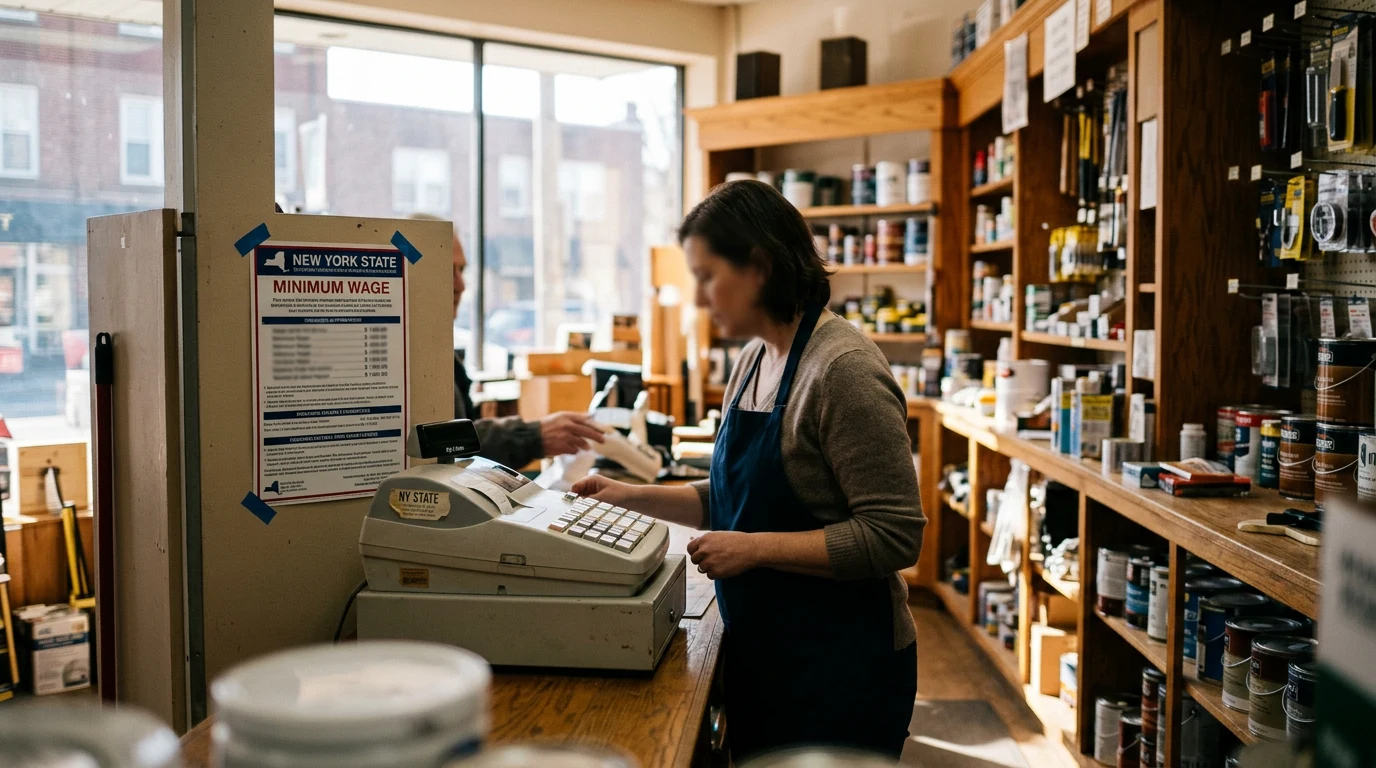
The division recovered more than $259 million for about 177,000 workers in fiscal 2025 alone (Department of Labor, fiscal year 2025). You do not need a lawyer to start one, and you do not pay a fee.
This article explains how the process runs, what the division can and cannot do, and what happens to a worker who files. It is information, not professional advice; for a specific dispute, a licensed attorney or the division itself is the right place to ask.
How does a Wage and Hour investigation start?
Most investigations begin with a complaint from a worker, a former worker, or sometimes a union or an advocacy group. Anyone can file online or by phone or in person at an area office; the division asks for basic facts such as the employer's name, the type of work, the pay method, and the hours worked. Complaints may be made confidentially, and the Fair Labor Standards Act makes it unlawful for an employer to fire or otherwise retaliate against a worker for filing.
Not every investigation starts with a complaint. The division also targets industries with a documented record of violations, and a Government Accountability Office review of the division's enforcement found that complaint data shapes much of its targeting (GAO-21-13, 2020).
What does the investigator actually do?
The investigator visits the workplace, often unannounced, and examines two years of records as a baseline, longer where a violation appears willful. Under the Fair Labor Standards Act an employer must keep payroll records, time cards, and records of what each worker was paid. The investigator compares hours worked against pay received and checks exemptions, such as whether overtime was properly withheld from salaried workers.
- Opening conference: the investigator explains the review and requests records.
- Records examination: payroll, time records, and worker interviews, some conducted privately.
- Findings conference: the investigator states what violations, if any, appear.
- Resolution: back wages owed are computed and the employer is asked to pay, supervised by the division.
What can the investigation recover?
Since late June 2025, the division's administrative route generally recovers unpaid wages only, without the equal amount in liquidated damages that used to be added in supervised payments (Department of Labor guidance effective June 27, 2025; reported by Sheppard Mullin, 2025). Double damages remain available when the department pursues a case in court. Workers receive any wages found owed; the division does not award pain-and-suffering damages, which is a courtroom remedy.
Does filing cost anything, and is it anonymous?
Filing is free, and a worker may ask that their identity stay confidential from the employer. Confidentiality is not absolute: an employer who can identify who complained from the circumstances may still learn it, which is why the law's anti-retaliation provision matters. A worker who is fired, demoted, or otherwise punished for filing can bring a separate retaliation claim.
How long does it take and what if you disagree?
The division aims to complete investigations in roughly six weeks to a few months, depending on the employer's size and the quality of its records. If the division finds wages owed, it issues a notice listing the amounts per worker and supervises payment. If it finds no violation, or a worker disagrees with the amount computed, the worker retains the right to file a private lawsuit for unpaid minimum wage or overtime within the statute's two-year deadline, three where the violation was willful.
What limits should you know about?
The two-year lookback is the main one: wages older than that generally fall outside the administrative computation. The division enforces federal law, so a state with higher wages or stricter rules may offer more, and its agencies run in parallel. An investigation also resolves the employer's conduct, not a worker's individual grievances such as scheduling fairness, which federal wage law does not reach.
What records must an employer keep?
The Fair Labor Standards Act requires employers to keep payroll records for at least three years and records on which wage computations are based, such as time cards and piece-work tickets, for two years. The division reads those records first, because in a records dispute the burden sits with the employer: where time records are missing or inadequate, the worker's reasonable account of hours can carry the computation, a principle the Supreme Court set out in Anderson v. Mt. Clemens Pottery Co. (1946) and investigators still apply.
What if an employer refuses to cooperate?
The division can seek access through administrative procedures and, in the end, through court orders compelling records and entry. Refusal rarely ends well for the employer: it invites an enforcement action, and the agency can treat records failures as their own violation. For workers, the practical point is that an employer's missing records are not the end of a claim; the law's computation rules anticipate exactly that situation.
What do worker interviews cover?
Investigators interview a sample of employees, sometimes privately, about hours, pay method, off-the-clock work, and deductions. Uniforms, tools, and gate allocations that cut a paycheck below the minimum wage are recurring findings. The interview record also feeds the retaliation side: a worker who describes adverse treatment after complaining hands the investigator a second file to open.
What does the worker receive at the end?
A computation sheet listing the back wages owed per pay period, followed by payment arranged through the division. Payments are issued to the last known address or account, which is why workers who move during an investigation are advised to keep their contact information current with the area office. Since October 1, 2025, the division has made these payments electronically, which shortens the lag between the finding and the money arriving (Department of Labor, Workers Owed Wages program, 2025).
What the record shows is a system built for volume: hundreds of millions of dollars recovered for hundreds of thousands of workers, in amounts that are usually modest. What remains unknown in any single case is the outcome, which depends on the employer's records and the facts the investigation finds.
Related: Wage agency reports $259 million recovered for 177,000 workers · The 30-day deadline for safety retaliation complaints.